
Context information is everything.
Showing posts with label languages. Show all posts
Showing posts with label languages. Show all posts
Saturday, 10 April 2010


Thursday, 6 November 2008
Favonius at work
Yesterday morning, as I went out home at 6:45AM, with a scarf around my neck, I was welcomed by an incredibly warm November morning. Even though the Sun had not still risen, we might have had 18ºC! How was that possible? Is it because now, with Obama, it won't be cold in November anymore? ;)
No. It is the Alpenföhn, a unique wind effect that happens near the Alps. When an air mass has to rise to spring over a mountain range, water condenses and falls as rain on the windward side. Past the maximum elevation, the dry air "falls down" the slopes and raises temperatures by as much as 30ºC on the leeward valley.
(Picture taken from Wikimedia Commons)
The name Föhn comes from the Roman God Favonius, who personified the west wind. Later on, it went through Rhaeto-Romance favuogn and fuogn until it reached modern German as Föhn. Interestingly enough, a hair dryer is called Fön, without "h". I read that the name was registered as trademark by AEG on the 20s.
The Föhn is often associated with migraines and psychoses. A study by the Ludwig Maximilian University in Munich claims that suicide and accidents increase by 10 percent during föhn winds in Central Europe. In fact, there is a Föhnkrankheit (Föhn sickness), which might be the perfect excuse to justify low performance on the job, excessive appetite or, simply, general apathy.
Other föhn wind examples around the world include the Chinook in the Rocky Mountains, North America, the Halny in the Carpathian Mountains, Eastern Europe, fogony and cierzo in the Pyrenees and viento del sur (southern wind) in Cantabria, northern Spain.
And I think I'm going to let it go for today, because, you know, there is Föhn today...

Saturday, 4 October 2008
Unpronounceable
When Austria entered the European Union in 1995, a request was made to recognise Austrian as an own language, independent from German. The EU experts replied that, except for a number of own words, most of them related to food, there were not enough differences between Austrian and German language to consider them independent.
One of these own words is today's favourite word. Zwetschken are a subspecies of plums (Prunus domestica domestica), bitter a bit acid in taste, which are in season right now. The German word for plums, in general, is Pflaume, but they are called Zwetschken in Austria.
And what is so funny about this word? If we count the number of vowels and consonants, we obtain proud 8:2 for the consonants. A nightmare for a Romanic language native speaker.
Many years ago, walking around Vienna on a cold October with a co-worker, we realised that the cold numbed our tongues and lips, making it really difficult for us to speak normally, as if we were coming from the dentist and anesthesia was still doing its thing. And right there we devised a theory: languages spoken on colder climates have to tend to be more guttural, because a guttural sound is easier to pronounce in a cold environment. On the other hand, languages from more benign climates can afford a richer articulation and pronunciation.
Is our theory right? I don't know, but I know for sure that some words will keep being a challenge for a long long time...

Thursday, 26 June 2008
Two pounds of reality, please!
One of the words that surprises me the most here is Realitätenbüro (lit. "realities office").

Even though the dictionary suggests it's the southern (*) word for a real estate agency, I think it's much more fun to imagine people going to a Realitätenbüro to learn to big truths about life, the realities, for example:
- money does not bring happiness, or
- Santa Claus is a green gnome, the red fat one was created by a renowned soft drink company.
Interesting, isn't it?
(*) at least, Mr. Google does not seem to find any Realitätenbüro north of Munich
Sunday, 9 March 2008
Wurst
Sausages are important stuff here in Central Europe. Not only because they are undoubtedly on the top spots of people diet, but also because the German word for it, Wurst, has surprising meaning changes, which made it today's favourite word.
Expression #1 is Jetzt geht's um die Wurst!, meaning that it gets really serious now, that it is neck or nothing, now for it! The sausage is here the heart of the matter, what really counts.
Expression #2 is Es ist mir Wurst!, which translates as "I don't care", "It's all the same to me". We seem to have lost all of our interest in sausages now!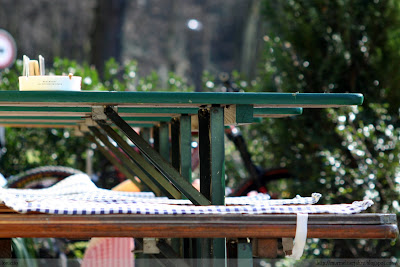
It's funny how close languages are, when you look at them from afar. Jetzt geht's um die Wurst! could loosely translate in Spanish as "Echar toda la carne en el asador" (lit. "to put all the meat to grill"). Meat is again something serious. And Es ist mir Wurst would be "Me importa un pimiento" (lit. "it means a pepper to me"). Apparently, in Spain we don't care about peppers, they don't care about sausages in Austria.
To-may-to, to-mah-to, ...
Tuesday, 23 October 2007
Des samma mia...
What has a dance metal band like Rammstein to do with traditional Bavarian oom-pah music? I was shown this video a couple of days ago, one of the best dubbing works I've ever seen. Even the audience sing-along goes with the song!
I like it also because the song is sung in Bavarian dialect, which is quite close to Austrian dialect. I love the Austrian dialect, especially since I am able to understand it a little bit. Austrian German (and Bavarian German, too) has a much sweeter melody than Standard German, as well as a great number of own words.
I have a challenge for all those who can speak or are learning German. The first (non-native) who transcribes the singer's dialogue with the audience wins a box of Mozart balls. Good luck! :)
Monday, 1 October 2007
Squirrels
I've always liked words. Language is one of the greatest inventions, one of those breakthroughs after which there is no way back. We, as humans, were probably meant to be intelligent, but it was just when we started to talk, as we started being able to communicate with each other, that we finally woke up from our long sleep, holding a torch in our hands, bringing the light of knowledge to a million year long and dark night.
I love words. But I like some better than others. For most of them I am not able to tell why. Just because they sound great or beautiful. Or maybe because they remember me of something happy. Or just because they remember me of something. Sometimes it's because they are, somehow, round. And sometimes, I don't know, they are just perfect.
I've decided to add a new label to my blog, favourite words, where I am going to present, from time to time, words and expressions that I love. I am not promising any regularity here, because they come and go, but I promise as soon as I find anything I will share it with you.
Today I've got an expression, a German one, which goes: Mühsam ernährt sich das Eichhörnchen.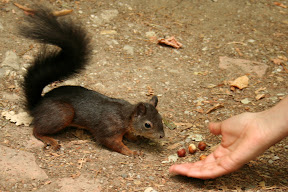
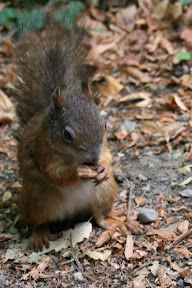
Which means, literally, "The squirrel feeds laboriously", and it's a German Redewendung (figure of speech) meaning something like "slowly but surely". I love the word Eichhörnchen (squirrel) because it is a diminutive and it remembers me of Einhorn (unicorn), although it has nothing to do with it. And I love the word mühsam, when used as in "laborious, strenuous", but not when used as in "cumbersome".
I love the visual power of this expression, because mühsam is exactly the way a squirrel eats a couple of nuts that you feed to it in a park, say in Schönbrunn, in Vienna.
Wednesday, 19 September 2007
The importance of words
If there is something I like about Austrians is their sincerity and how do they say stuff in a straight way. For good and for bad, they do not talk in roundabouts. Which is something quite nice, because understanding certain euphemisms in a foreign language is no easy job. Like the time I was at the doctor and the nurse asked me if I could make a Hahn (which may mean rooster, tap or valve). Even though I said yes without a doubt, used as I am to understanding things after a little delay, I guess my face might have been quite explicit, because until she had some mercy and pronounced the word Urin I did not realise that she was asking me for an urine test.

But I am loosing my focus. I was saying that Austrians do not like roundabouts and tend to call a a spade a spade. As an example, the piece of news that I read yesterday about the doormen of one of the most poshy locations in Salzburg, who did not let in an Iranian and a Bolivian because, using their own words, "there were already too many foreigners inside." No roundabouts. No evasive answers. And no shame, I would point out.
The arrest of an alleged group of Islamist terrorists in Vienna (who were, in fact, nothing but three morons that used the Internet to utter threats and, allegedly, could have got some information about what would they have to do in the event of having to get themselves some explosives) has been all too good for some critical voices with Islam and its presence at the heart of Europe. The usual hatemongers appeared on the media right away: Jörg Haider, from his Carinthian fief, championing a veto on headscarves and minarets, and HC Strache, shielded by the intellectual elite in Brigittenau, picketing the building of an Islamic cultural centre. The novelty this time is that they come along with some other characters, who do not lean so much to the right, like Lower Austria's Landeshauptmann (something like the head of the provincial government), Erwin Pröll, a couple of weeks ago.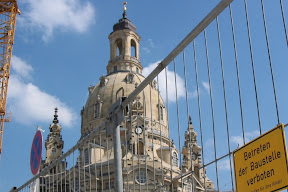
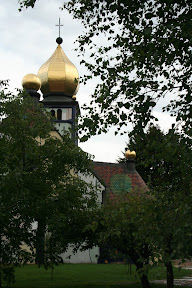
There is no need to erect a mosque in Lower Austria, stated the guy, because "minarets are foreign (etwas Artfremdes). And, in the long run, foreign does no good to a culture." And let us stop here for a moment to weigh the word choice. It is difficult to translate the word Artfremd. It might be something alien, something foreign. This word is by no means new and has some quite negative connotations. It was used, along with entartet (degenerate, depraved) and ungesund (unhealthy, noxious), to refer to the work of Jewish artists. In 1937 the Entartete Kunst (degenerate art) exhibition opened in Munich, featuring over 650 paintings, sculptures, prints and books by modern artists like Oskar Kokoschka, Marc Chagall, Otto Dix or Emil Nolde, selected by the Reich Ministry for Popular Enlightenment and Propaganda among the 16000 confiscated by the Nazis. The exhibition wanted to horrify the visitors with the depravation of Jewish art. Interestingly enough, it has been the most successful modern art exhibition in Germany ever since, with more than 2 million visitors.
Mr. Pröll might have chosen fremdartig (exotic, alien, unfamiliar), which sounds far less harmful than artfremd. Although I have read that he also likes to use Überfremdung, a word meaning something like "foreign infiltration", which is one of the favourite words of the right wing extremism, and was voted Faux-pas Word of the Year (Unwort des Jahres) in 1993 by the Gesellschaft für deutsche Sprache (Society for the German Language).

Setting the word choice aside, I think claiming that foreign does no good to a culture is very sad and shows an alarming simple-mindedness. How would be Lower Austria today, had the "foreign" Celtic and Roman people not come? But I guess that my buddy Pröll, seeing how extended that profound ignorance that identifies Islam with terrorism is, does nothing but catching a cheap argumentation train. With quite undesirable travel companions, might I say.
Maybe it is the need to feel themselves members of a group, the need to feel special, what drives those not-any-more-teenagers to believe that shouting Allah Akhbar before pushing that little button will bring them into Paradise... Maybe we all have this need to belong to a group, to feel special.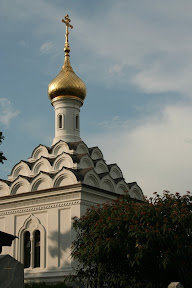

From my side, I do feel quite special when I realize, for example, that the Spanish word zanahoria bears no resemblance to any other language whatsoever (neither the English carrot, nor the German Karotte or Möhre, nor the Italian carota, nor the French carotte, nor the Catalan pastanaga, nor the Occitan pastenaga, nor the Greek καρότο), except perhaps the Portuguese cenoura. When I realize that "Spain is different", and probably the most admired here Spanish spiritedness, have their roots in Al-Andalus and in Islam. When I listen to the lively phone conversation of that friendly man wearing a turban who sometimes shares the bus with me on the way back home and I realize that, if I don't pay much attention to the words but only to the melody, he could be perfectly taken for someone from Málaga or Córdoba.
And on realizing all that, I feel really proud of that Moorish DNA, of that Maghreb and Arabic heritage that we Spaniards have in our blood, an old and wise heritage that, were we able to listen to it, would tell us its story. Our History.
Saturday, 21 July 2007
About time and clocks
I am often asked questions that I don't really know how to answer. For example, when I explained that we went swimming to a lake last weekend, I was asked about the water temperature. I said that it was a little cold for me, but they were asking about the actual temperature, in degrees. I learned afterwards that water temperature is normally displayed in public baths, and Austrians seem to be obsessed with it. Is it that important? Especially when we are talking about 19ºC or 21ºC. What a difference do 2ºC make? Does our skin really have the resolution of a thermometer?
One of the facts that still astonishes me about Austria is the concept of time. If the bus should come at, say, 07:21 and it's already 07:23 and it has not come yet, you'll start to see angry faces who look at clocks with exasperation and shake heads. Even if the bus actually comes at 07:24, chances are high that someone will complain to the bus driver. Sie nehmen von uns Zeit! (You are taking time from us!).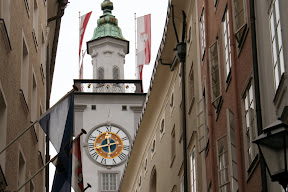

Time seems to be really important. I can understand it when you are going to work, because you don't want to be late. No problem. But the same happens when they go home after work. Time you are commuting is lost, seems to be the idea. They seem to be in a hurry and would rather take the car (or the train, or the bus) if it saves 3 minutes (3 minutes!!!) on the way back home. I don't understand that. Is it maybe because they still have something important to do? Not really, most of them just want the time for themselves, to sit around on the couch drinking a beer and watch TV. So, do really that 3 minutes make a difference? Why do they always seem to be in such a hurry? More importantly, why do they keep pushing my butt with their trolleys on the supermarket queue? :)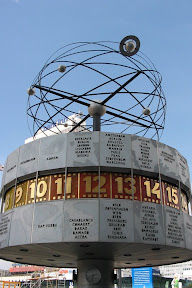

Even when you want to meet a friend, you say Hast du Zeit am Samstag? (Do you have time on Saturday?). Time is a very important resource here, and the question Do you have time? puts the stress exactly on this resource. Are you willing to spend your precious resource time meeting me? The expression to spend time is significant as well. Time is spent as if it were money.
I can't imagine myself saying ¿Tienes tiempo el sábado? to a Spanish friend of mine. I would say ¿Quedamos el sábado? (Shall we meet on Saturday?). The stress is not on the resource time, but in the fact that I want to meet you. I think the language that we speak is shaped by the way we think. You will have heard the word Zeit quite often at the end of the day here. 
I guess it's because I come from a southern country that I'm surprised. Because, you know, time is not that important there. And I would say that Austria is just in the middle, I guess (I heard) it keeps getting worse as you go up north.
I met once a sahrawi girl, who told me that the desert people have a very wise saying: You Europeans may have the clocks. We have the time.
Monday, 4 June 2007
Katholischesland Spanien: the need for qualifiers
We were once at the Grünmarkt (green market) in Salzburg on a Saturday morning and saw some nice pears in a stall. They were so good looking that we decided to get two of them to eat right away. We approached to fruit monger and told him (in German): "Two pears, please". And then he answered, quite rudely by the way: "Two what? Two pieces? Two kilos? Two boxes?". Apart from following our standard procedure of not returning ever again to those stands where people is mean to us, the experience made me think.
Not only did I came to Austria with all my personal biases, I started to encounter the austrian ones as well. One of my favourites is: "Oh! You come from the Holy Spain! What a religious country!". The words are normally Katholischesland Spanien ("Spain, catholic country"). Maybe it is because the spanish cities where I lived are not especially pious, or it might as well be that the region where I live here is quite devotional (it is said that one fifth of the Salzburgers go to church every Sunday, that's 30.000 out of 150.000 people...) but I find (the part of) Austria (that I know) is quite more religious as (the part of) Spain (that I know). But that's another topic, to which I will devote another post sometime.
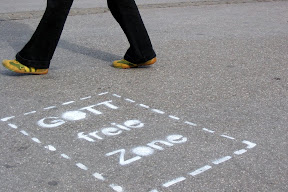
This preamble tries to provide some examples of what I like to call the need for qualifiers of the German language. If you read something about Mallorca on the newspaper, it will be invariably referred to as Ferieninsel Mallorca ("holiday island Mallorca"), even though the news has nothing to do with holidays. When a bridge collapsed in Almuñécar last year, the TV reported about Urlaubsort Almuñécar ("vacation place Almuñécar"). One gets the impression that there is no place for other business than tourism in Mallorca. Are there no fishermen or policewomen in Almuñécar? Would the audience not understand if they just talked about Mallorca or Almuñécar, maybe with a reference to the geographical location, but no other qualifiers needed?
This interesting feature is by no means limited to places abroad, it applies as well to towns and cities in Austria and Germany. They are called Namenszusätze ("name affixes") and promote Salzburg to Mozart- und Festspielstadt Salzburg ("Salzburg, city of Mozart and the Festival") or Hannover to Messe- und Expostadt Hannover ("Hannover, city of fairs and expositions"). There are no illusions left to the visitor: everything to be discovered in that city is already noisily marketed on big billboards before arriving.
I think the rude demand for precision of the fruit monger was just another instance of the need for qualifiers. You have to say thinks precisely when speaking German. You cannot simply say die Großglocknerstraße ("the Großglockner road", the highest mountain road in Europe) because you might not be understood. You must say its full name: die Großglockner Hochalpenstraße ("the Großglockner high alpine road").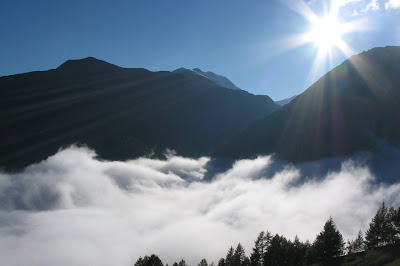
A sea of clouds as seen from the Großglockner Hochalpenstraße
This need for qualifiers of the language comes together with another feature that we observed on some people here: the need to classify. Everybody and everything needs to be screened, judged, labeled and classified. If you come from Spain, you have to be passionate, fun-loving and a little bit of a womaniser. If you come from Russia, you are probably depressive and drink a lot of vodka. If you come from Britain, you are expected to be always on time, you drink warm beer and you get probably a little violent when it comes to football. And so on... I think they have many more of such clichés here than in Spain. Or, at least, I was surprised by the number of them that you might hear.
And then the issue is: Do we talk the way we do because of how we think? Or do we think the way we do because of how we talk?
Tuesday, 29 May 2007
Why English?
My mother tongues are spanish and catalan. I have been lucky enough to be raised on both of them. I think bilingual education is one of the best gifts parents can make to their children because it gives you (almost) twice as many references for free. That's a good thing to have, especially when learning other languages.
I used to learn English in the school, then I used it extensively on my work. I think I was able to speak English quite decently. Then we decided to move to Austria. At first I had to rely on English. I spoke only a little German, really too little to be useful. And I decided to learn the hard way.
I started by setting myself very small goals (like "I won't speak a single word in English at lunch time today") and with a lot of patience and effort and time, I now find myself speaking only German, the whole day. That is really fine, and I would be very happy... were my English not gone! When I now open my mouth to speak English, it is quite probable that a number of German words camouflage within the sentence. Even if I put together all of my concentration to the business, I can't help it! The same happens, to a lesser extent, when writing. I have to focus, the verbs not at the end of the sentence to write! ;)
I have a theory. The (mean) human brain is not really prepared to deal with two foreign languages. It just operates in two modes: "mother language" and "foreign language". The foreign language drawer of my brain, which was then happily populated by English, is now dominated by German. Now when my brain switches to foreign language mode, there's just German there. English seems to be on the background.
I hope my English is not really gone. I try to convince myself that with some more practice everything will be all right. And to begin with that practice, I decided to write this blog in English.
Subscribe to:
Posts (Atom)
 versión en español


